Secret Types
Each type renders a type-aware form with exactly the fields that make sense. Fields marked secret are stored masked and revealed only on demand (audited). Plain fields (host, url, username…) stay readable and can become optional table columns.
Field catalog
Secret fields are marked 🔒; plain fields are shown as-is.
| Type | Fields |
|---|---|
api_key (default) | 🔒value |
access_token | 🔒token · 🔒refresh_token · expires · scopes |
oauth | client_id · 🔒client_secret · auth_url · token_url · scopes |
jwt | 🔒token · issuer · audience · expires |
ssh_key | 🔒private_key · public_key · 🔒passphrase · host · user |
certificate | certificate · 🔒private_key · chain · expires |
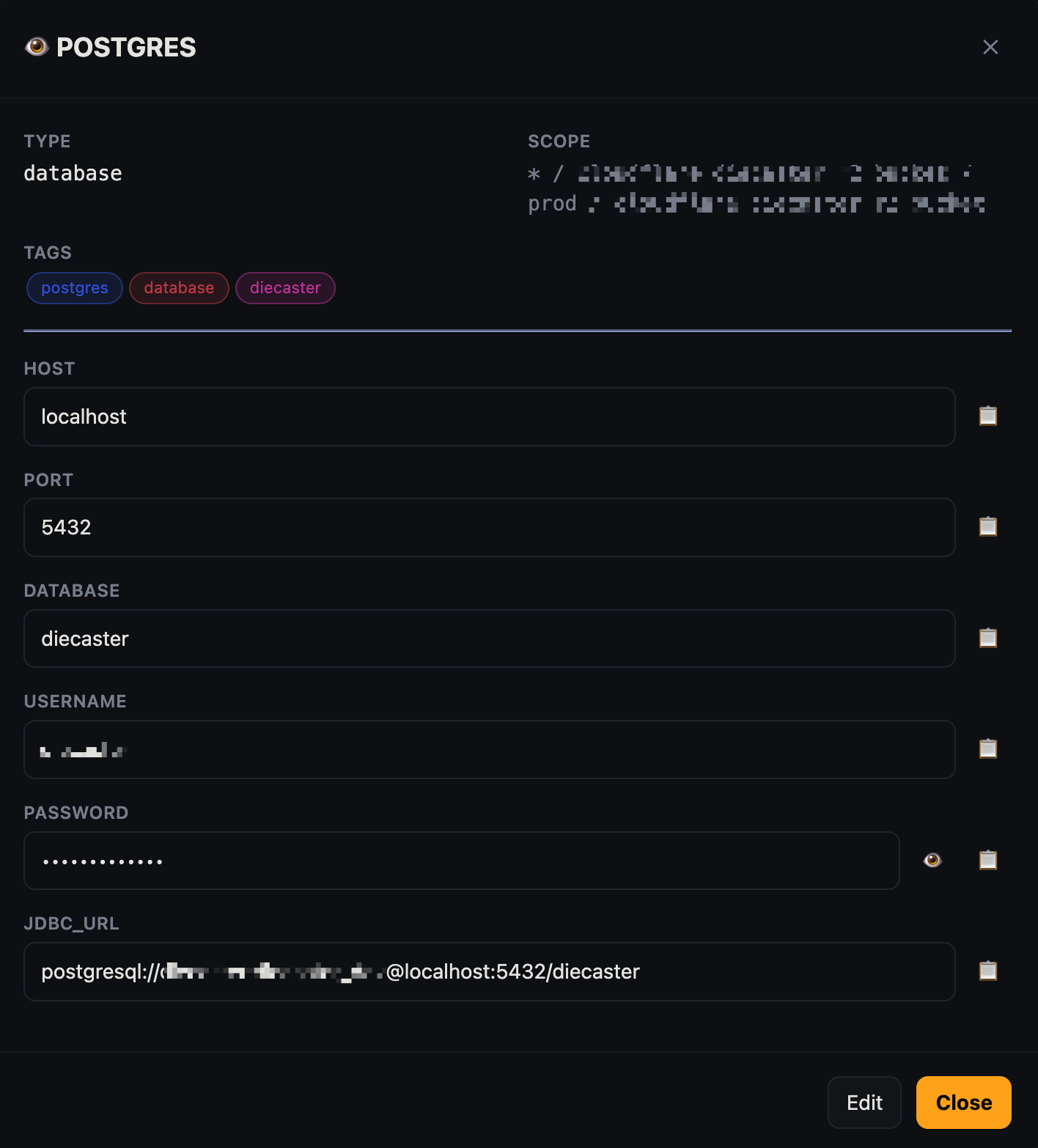
database | host · port · database · schema · username · 🔒password · auth_type · 🔒jdbc_url |
server | host · port · username · 🔒password · 🔒ssh_key |
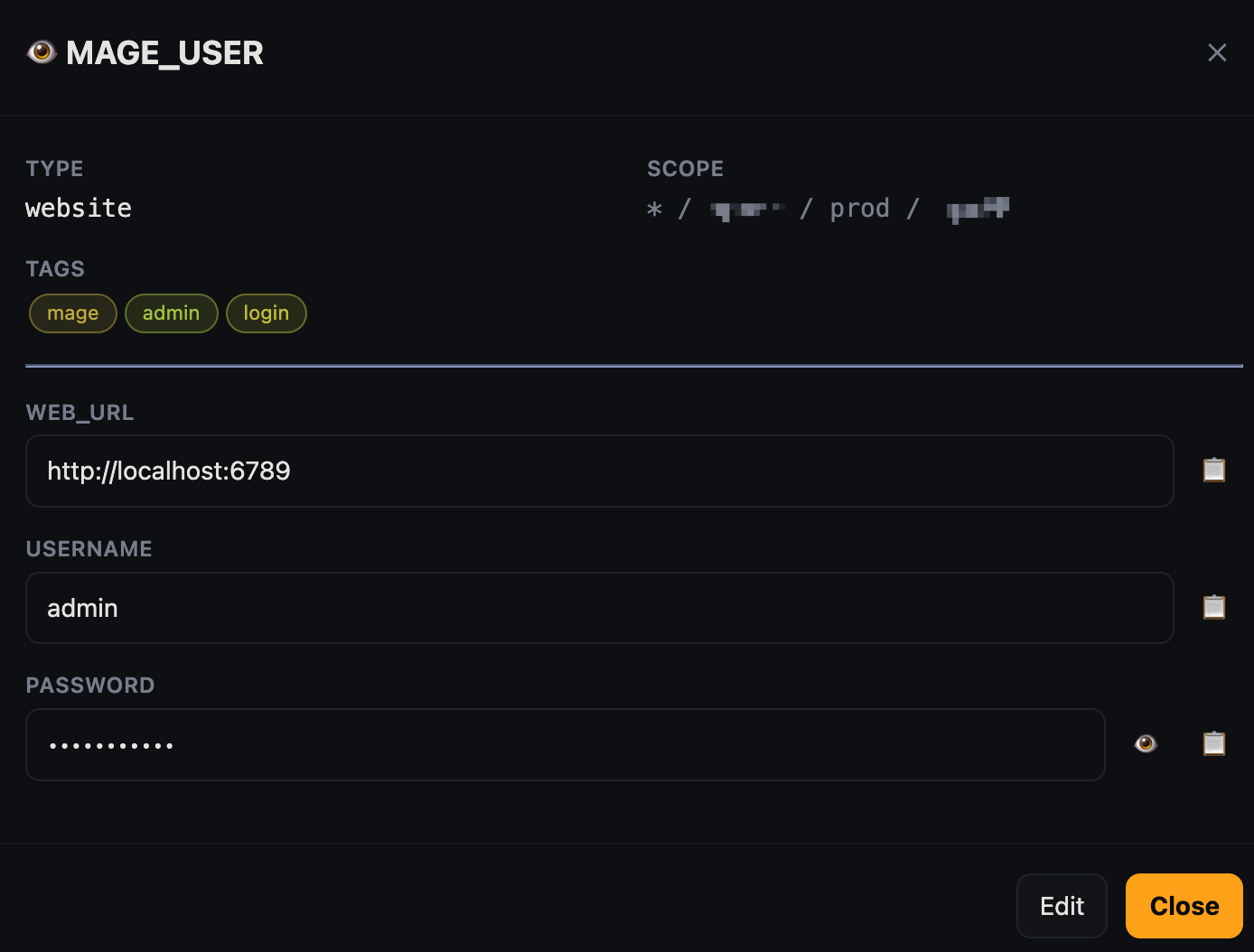
website | web_url · username · 🔒password |
login | web_url · username · 🔒password · 🔒totp |
pin | 🔒pin · label |
wifi | ssid · 🔒password · security |
membership | provider · member_id · 🔒password |
secure_note | 🔒note |
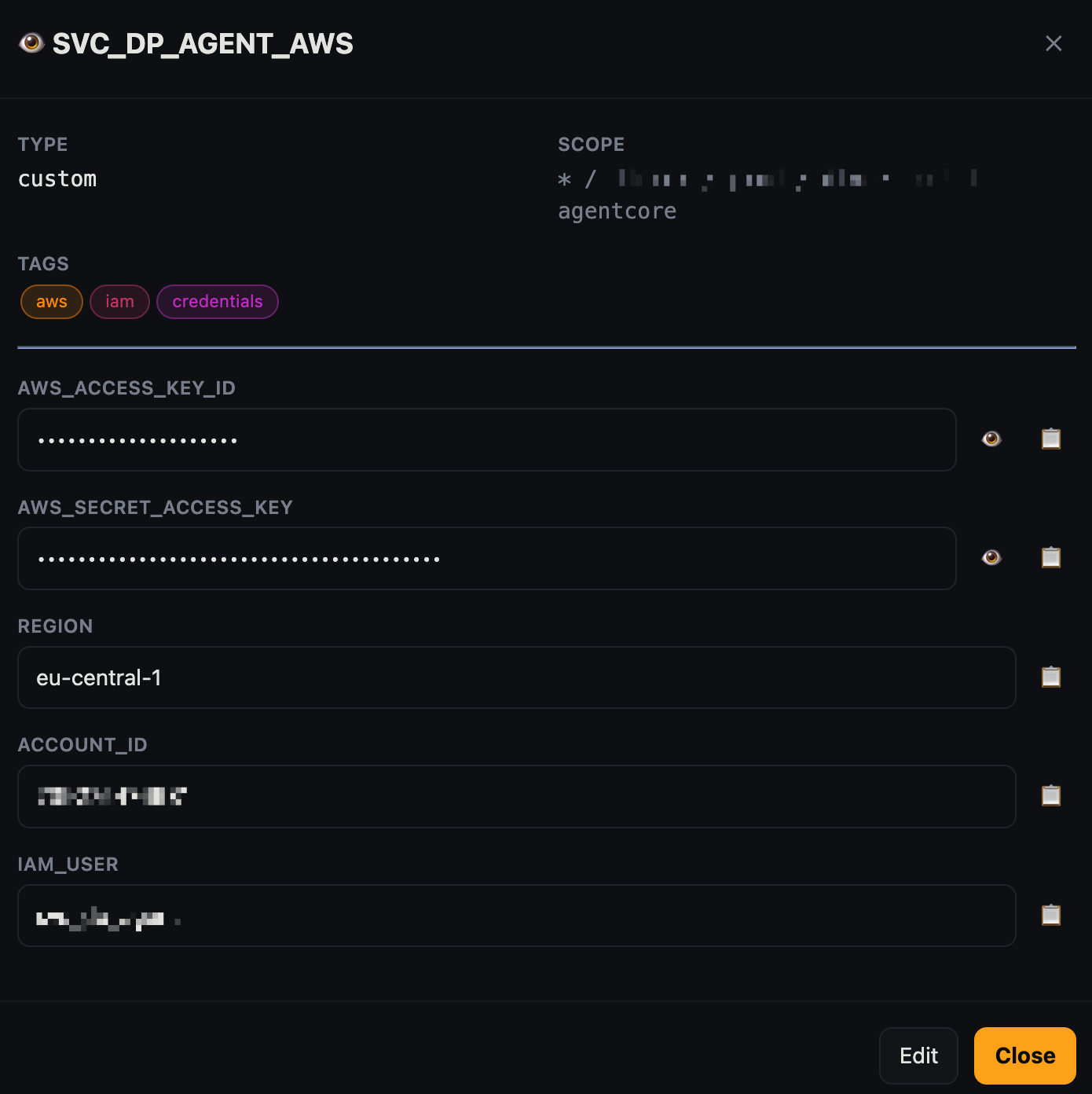
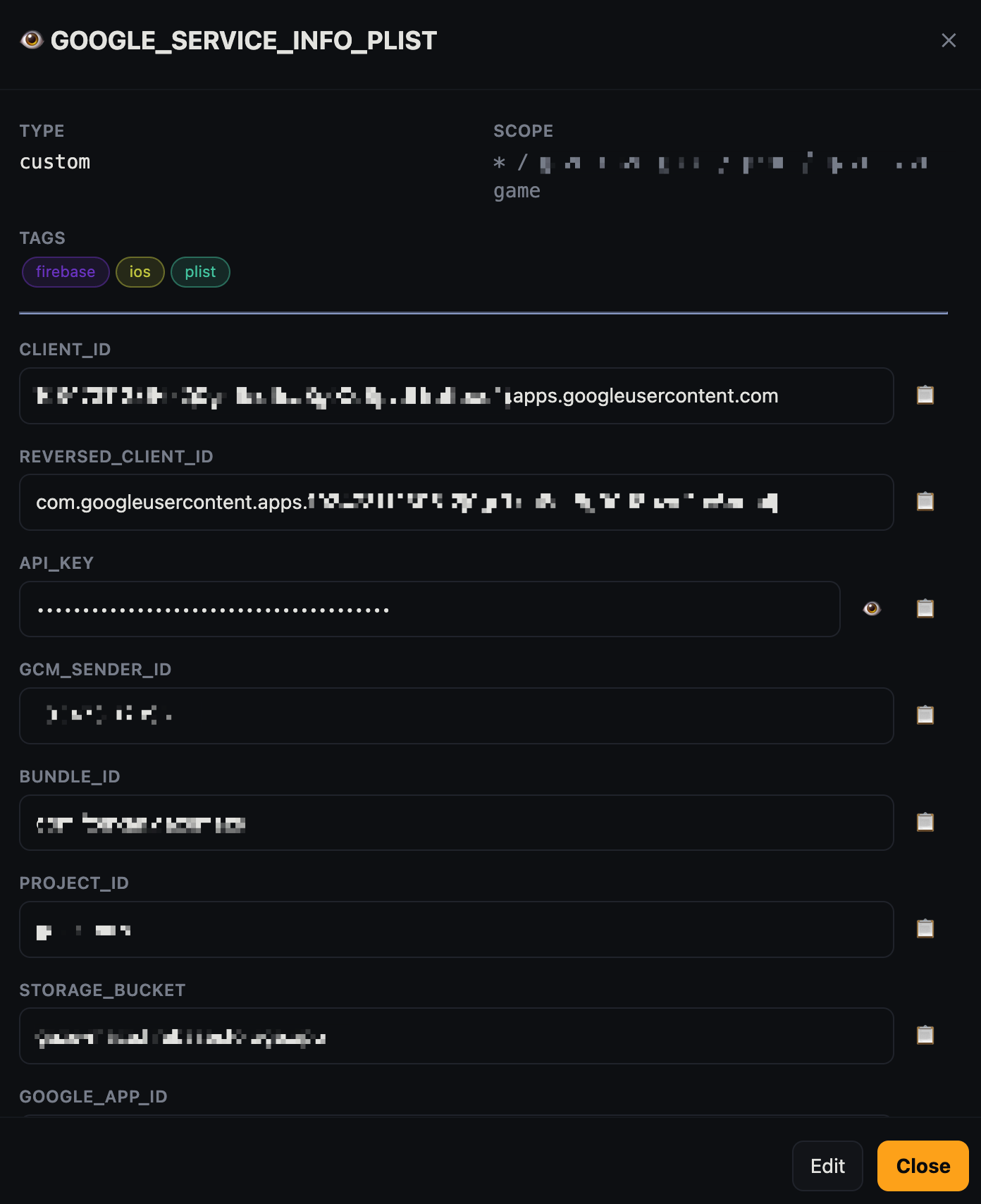
custom | any key/value you define |
jdbc_url is treated as secret because a connection string carries embedded credentials.
Each type renders exactly the inputs it needs — a cloud credential carries its client/secret/URLs, a database its host/port/user/password, a website its URL/login, and custom any free-form key/value:
No PII by design
There are deliberately no credit-card, passport, or national-ID types. This vault is for machine and account credentials, not identity documents.
How masking is decided
A field is treated as secret if any of these hold (checked in order):
- Per-record override —
field_meta[field].secret. Settingsecret: falseis the only way to force a template-secret field to render plain. - Type template — the 🔒 marks in the table above.
- Field-name heuristic — the name matches
pass | secret | token | value | key | credential | apikey. - Value heuristic — the value contains embedded credentials like
scheme://user:pass@host(DSNs,jdbc_url,redis://:pw@…), even in an otherwise plain field.
Masking style: field_meta[field].mask == "full" renders ••••••••; otherwise partial masking shows the first 4 and last 2 characters (abcd…yz).
Setting typed secrets from the CLI
Pass field=value pairs; the bare-value form is only for single-value types like api_key.
# api_key — bare value
concealer set --name OPENAI_API_KEY --project web sk-DUMMY-123

# database — field=value pairs
concealer set --name pg --type database --project web --env prod \
    host=db.local port=5432 database=app schema=public \
    username=app password=sk-DUMMY-pw auth_type=password

# custom — any keys you like
concealer set --name webhook --type custom --project web \
    url=https://hooks.example/abc signing_secret=sk-DUMMY-sig
When these are injected via run / run_with_secrets, a typed secret becomes per-field environment variables: PG_HOST, PG_PORT, PG_PASSWORD, … (the field name uppercased and prefixed with the secret name). An api_key injects as a single OPENAI_API_KEY=….